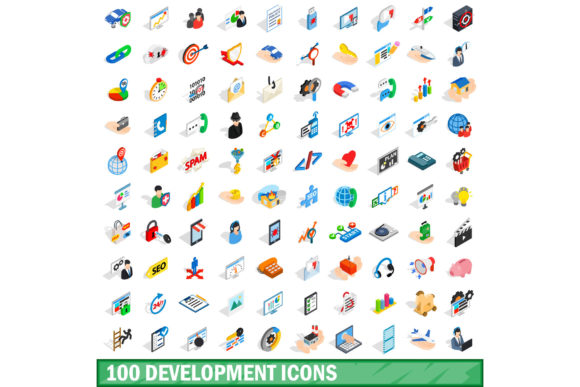
100 Development Icons Set: A Practical Evaluation for Modern Design Workflows
In the landscape of digital asset creation, finding a cohesive set of graphics that balances technical accuracy with aesthetic appeal is often a challenge. The 100 Development Icons Set addresses this specific need by offering a comprehensive collection tailored for software, web, and application design. This resource is not merely a random assortment of shapes; it is a curated library designed to streamline the visual communication of complex development concepts. Whether you are building a landing page for a SaaS startup or creating documentation for an open-source project, the utility of such a set lies in its ability to convey meaning instantly without cluttering the interface.
The value of this collection extends beyond simple decoration. In professional environments, where clarity and speed are paramount, having access to high-quality vector illustrations can significantly reduce production time. The set includes both standard flat representations and specialized variations in isometric 3D style, providing designers with the flexibility to match their brand's visual language. By examining the technical specifications, file formats, and practical applications, we can determine how this tool fits into various workflows for freelancers, agencies, and enterprise teams alike.
Bridging Technical Concepts and Visual Clarity
Development is inherently abstract. Concepts like cloud computing, version control, database management, and API integration are difficult to visualize without relying on established metaphors. The 100 Development Icons Set leverages these metaphors effectively. Each icon serves as a visual shorthand, allowing users to grasp the function of a feature at a glance. This is particularly critical in user interfaces (UI) where space is limited and cognitive load must be minimized.
What distinguishes this set from generic icon libraries is the attention paid to the nuances of the development ecosystem. You will find specific representations for tools like Git, Docker, Kubernetes, and React, rather than just generic "code" symbols. This specificity ensures that the graphics resonate with the target audience—developers and tech-savvy professionals who can spot inaccuracies immediately. When a designer uses an icon that misrepresents a tool's logo or function, it undermines the credibility of the entire project. This set mitigates that risk by adhering to industry standards while maintaining a unique artistic identity.
The Strategic Value of Isometric 3D Styles
One of the standout features of this collection is the inclusion of icons rendered in an isometric 3D style. While flat design remains popular for its clean lines and scalability, isometric illustrations offer depth and dimensionality that can make a design feel more dynamic and engaging. This style is particularly effective for:
- Landing Pages: Adding depth to hero sections creates a focal point that draws the eye.
- Infographics: Complex data visualization benefits from the spatial arrangement of isometric elements.
- Presentation Decks: 3D-style assets can elevate slide decks, making them more memorable for stakeholders.
The availability of both styles within the same package allows for mixed-media approaches. A designer might use flat icons for navigation menus to maintain consistency and low visual weight, while employing the 3D versions for key feature highlights. This versatility means that the 100 Development Icons Set can adapt to evolving design trends without requiring the purchase of a completely new asset pack.
Technical Specifications and File Flexibility
For professionals, the usability of an asset is often determined by its technical delivery. The 100 Development Icons Set is provided in a robust array of formats including JPG, EPS, AI, PSD, and PNG. This variety caters to different stages of the design process and various software ecosystems.
The inclusion of vector formats like EPS and AI is non-negotiable for serious design work. These files ensure that the icons remain crisp at any resolution, from a small favicon to a massive billboard display. Vectorization also allows for easy color customization. If a brand updates its color palette, a designer can simply recolor the vector paths without losing quality or having to request a new file from the creator. This flexibility is essential for maintaining brand consistency across multiple touchpoints.
Conversely, the availability of raster formats like PNG and JPG offers immediate convenience. For developers who need to drop images directly into a CMS or a quick prototype without opening Adobe Illustrator, these pre-rendered files save valuable time. The PSD format adds another layer of utility for Photoshop users, potentially containing layers that allow for advanced manipulation, shadow adjustments, or texture overlays. Having all these options in one download eliminates the friction of converting files or searching for compatible versions later in the workflow.
Practical Application and Workflow Integration
How does this set perform in real-world scenarios? Consider a scenario where a freelance developer is tasked with creating a portfolio site for a fintech client. The client needs to explain their security protocols and backend architecture. Using the 100 Development Icons Set, the freelancer can quickly populate the "Features" section with relevant icons representing encryption, server stacks, and data analytics. The consistent line weight and style across the 100 icons ensure that the final output looks professional and cohesive, avoiding the jarring effect of mixing disparate graphic styles.
Similarly, for educators creating online courses about programming, these icons serve as excellent visual aids. They can break up long blocks of text, making tutorials more digestible. The isometric variations can be used to create diagrams that illustrate system architecture, helping students visualize how different components interact. The ability to scale these assets without pixelation is crucial when exporting course materials for print or high-resolution screens.
However, it is important to approach such resources with a critical eye. While the set offers significant value, it may not replace custom illustration services for highly branded campaigns. If a company requires a mascot or a unique character that tells a specific story, a generic icon set, no matter how high quality, will fall short. The 100 Development Icons Set is best utilized as a foundational element or a supporting asset rather than the sole creative driver of a major branding initiative.
Audience Fit and Limitations
This resource is particularly well-suited for:
- Freelancers and Solo Entrepreneurs: Those working with tight budgets and deadlines benefit immensely from ready-made, high-quality assets.
- Marketing Teams: Marketers creating whitepapers, case studies, or ad creatives can leverage the icons to enhance visual storytelling.
- UI/UX Designers: Professionals building dashboards or mobile apps require consistent iconography to maintain usability standards.
There are limitations to consider. The set relies on existing conventions; if a specific niche tool is very new or obscure, it might not be included. Additionally, while the isometric style is trendy, it may not fit every minimalist aesthetic. Designers should evaluate whether the 3D look aligns with their current design system before committing to using it extensively. Furthermore, while the vector files offer editing capabilities, they may not always be perfectly optimized for code-based implementation (such as SVG sprites) without some manual cleanup.
Long-Term Value and Investment
When evaluating the 100 Development Icons Set, the return on investment becomes apparent over time. Unlike stock photos which can become dated or lose relevance, good iconography has a longer shelf life. As long as the underlying technology concepts remain recognizable, these assets will continue to serve their purpose. The diversity of formats ensures that the files remain usable even as software updates change over the years.
The consistency of the set is its greatest strength. In a chaotic digital environment where content is scattered across dozens of platforms, having a unified visual vocabulary helps build trust. Users subconsciously recognize patterns; when icons are uniform in style, stroke width, and perspective, the interface feels polished and reliable. This perception of quality directly impacts user engagement and conversion rates.
Ultimately, the decision to use this set depends on the specific goals of the project. For those seeking to communicate technical ideas clearly and efficiently, the 100 Development Icons Set offers a pragmatic solution. It bridges the gap between complex development logic and human-friendly visuals. By providing a wide range of formats and styles, it empowers creators to focus on strategy and content rather than spending hours drawing basic shapes. In a market saturated with low-quality clip art, this collection stands out as a professional-grade tool that respects the intelligence of both the designer and the end-user.
Whether you are a seasoned agency director or a hobbyist building your first app, integrating these icons into your workflow can yield tangible improvements in the presentation of your work. The combination of technical precision, stylistic variety, and format flexibility makes it a worthwhile addition to any digital designer's toolkit.