100 Feedback Icons Set: A Strategic Asset for Clear Communication
In the landscape of digital design and business communication, clarity is not merely an aesthetic preference; it is a functional necessity. The 100 Feedback Icons Set represents more than a collection of graphical elements; it serves as a visual vocabulary designed to streamline complex interactions between brands and their audiences. For entrepreneurs, marketers, and decision-makers, the ability to convey approval, progress, or critique instantly can significantly impact user experience and operational efficiency. This resource, available in versatile formats including JPG, EPS, AI, PSD, and PNG, offers a robust toolkit for professionals seeking to enhance their visual storytelling without compromising on precision.
The value of this set extends beyond simple decoration. When integrated thoughtfully into workflows, these icons facilitate faster cognitive processing for users. In an era where attention spans are fragmented, a well-placed icon from the 100 Feedback Icons Set can guide a user through a survey, validate a completed task, or signal a system status update in a fraction of the time required by text alone. This efficiency translates directly into better retention rates and improved conversion metrics, making it a strategic investment for any design vector illustration project.
Strategic Alignment and Goal-Oriented Design
Effective design is never random; it must align with specific business objectives. Whether you are a freelancer building a portfolio, an educator creating interactive course materials, or a small business owner refining your customer journey, the application of feedback mechanisms is critical. The 100 Feedback Icons Set provides the visual language necessary to support these goals. By utilizing distinct symbols for positive reinforcement, constructive criticism, or pending actions, designers can create intuitive interfaces that reduce friction.
Consider the scenario of a SaaS platform launching a new feature. To gauge adoption, the team needs to solicit user opinions. Integrating a rating system using icons from this set allows users to express satisfaction levels immediately. This data collection is seamless, encouraging higher participation rates compared to open-ended text fields. Similarly, for bloggers and publishers, incorporating visual cues for article ratings or comment sentiment can foster a more engaged community. The strategic use of these graphics ensures that the feedback loop remains open, transparent, and actionable.
Enhancing Brand Positioning Through Visual Consistency
Consistency is the backbone of strong branding. When a brand communicates effectively across all touchpoints, it builds trust. The 100 Feedback Icons Set supports this consistency by offering a cohesive style that can be applied across various media. Whether used in a mobile app interface, a printed report, or a web-based dashboard, the uniformity of the design reinforces brand identity. For professional educators, maintaining a consistent visual tone in learning management systems helps students focus on the content rather than deciphering confusing UI elements.
Furthermore, the availability of multiple file formats—such as AI, EPS, and PSD—ensures that these assets remain scalable and editable. This flexibility allows creative teams to adapt the icons to different color palettes and brand guidelines without losing quality. In a competitive market, these subtle details contribute to a polished, professional image that distinguishes a business from its competitors.
Operational Efficiency and Workflow Optimization
For operations managers and project leads, time is a finite resource. Streamlining internal communications and external reporting can yield significant productivity gains. The 100 Feedback Icons Set acts as a force multiplier in these contexts. Imagine a project management tool where task statuses are updated via icons indicating "approved," "needs revision," or "completed." This visual shorthand reduces the need for lengthy email chains and clarifies responsibilities instantly.
In the realm of customer experience (CX), the speed of response is paramount. When customers encounter issues, they expect quick resolution. Using icons to categorize support tickets or display service levels can expedite the triage process. For freelancers managing multiple clients, having a ready-to-use library of feedback visuals simplifies the creation of status reports. Instead of manually drawing charts or writing paragraphs to explain progress, a designer can insert relevant icons from the set to illustrate milestones clearly.
- Rapid Prototyping: Quickly visualize user flows and feedback loops during the design phase.
- Reduced Cognitive Load: Help users understand complex processes through familiar visual metaphors.
- Scalable Assets: Utilize vector formats like PNG and EPS to ensure crisp rendering on any screen size.
Isometric 3D Styles for Modern Engagement
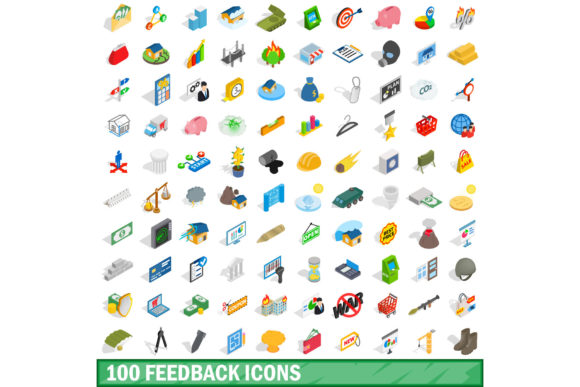
A notable variation within this collection is the 100 feedback icons set in isometric 3d style. Isometric design has gained traction in recent years due to its depth and modern appeal. This style adds a layer of sophistication that flat designs sometimes lack, making it particularly effective for landing pages, promotional materials, and high-end presentations. The three-dimensional aspect draws the eye, creating a sense of immersion that encourages interaction.
When deciding whether to use the standard or isometric versions, consider your target audience and the medium. For technical documentation or enterprise software, clean, flat icons often communicate better. However, for marketing campaigns aimed at younger demographics or lifestyle brands, the isometric 3d style can inject personality and energy into the design. This versatility ensures that the 100 Feedback Icons Set remains relevant across diverse industries and trends.
Decision-Making and Risk Mitigation
While the potential benefits are substantial, relying on visual assets without a clear strategy can lead to unintended consequences. One of the primary risks of using the 100 Feedback Icons Set indiscriminately is visual clutter. Overusing icons, especially when they do not add semantic value, can confuse users and dilute the message. It is crucial to approach this toolkit with intentionality, ensuring that every icon serves a specific purpose in the narrative.
Another consideration is cultural context. Symbols that denote "thumbs up" or "checkmarks" may have different connotations depending on the region or demographic. Before deploying these icons globally, decision-makers should verify that the chosen symbols align with local norms and expectations. Additionally, accessibility must be a priority. Relying solely on icons without accompanying text labels can exclude users who rely on screen readers or have visual impairments. Best practices dictate that icons should always be paired with descriptive alt text or captions.
To mitigate these risks, organizations should establish a design system before integrating the icons. This involves defining rules for usage, sizing, and placement. For example, a rule might state that feedback icons are only used in confirmation modals or status bars, never in isolation. By adhering to such guidelines, teams can maintain a coherent user experience that enhances rather than detracts from the overall product.
Practical Applications Across Industries
The utility of the 100 Feedback Icons Set spans a wide array of sectors. In education, teachers can use these graphics to provide immediate feedback on student assignments, making the grading process more engaging and less intimidating. For hobbyists and content creators, adding visual elements to tutorials or blogs can increase reader engagement and shareability.
Marketers can leverage the set to create compelling infographics that summarize survey results or highlight key performance indicators. The availability of JPG and PNG formats makes these assets easy to embed in social media posts, while AI and PSD files allow for deep customization in print campaigns. Small business owners can utilize these icons to improve their website's navigation, helping customers find information quickly and reducing bounce rates.
In the field of product development, feedback icons are essential for beta testing phases. They allow developers to track user sentiment in real-time, identifying pain points before a full-scale launch. This iterative process, supported by clear visual data, leads to more robust products and higher customer satisfaction scores.
Long-Term Value and Adaptability
Investing in a comprehensive icon set like this one offers long-term value. As businesses grow and evolve, their visual requirements change. Having a versatile library of assets means that teams can adapt to new projects without constantly sourcing new graphics. The inclusion of both standard and isometric styles ensures that the set remains useful even as design trends shift. Moreover, the vector nature of the files guarantees that the icons will look sharp on future devices with higher resolutions.
Ultimately, the 100 Feedback Icons Set is a tool for empowerment. It enables designers, developers, and strategists to communicate more effectively, make data-driven decisions, and create experiences that resonate with users. By focusing on strategic application rather than mere decoration, professionals can unlock the full potential of these assets. Whether enhancing a personal blog, optimizing a corporate dashboard, or refining a customer service workflow, the thoughtful integration of these icons contributes to better outcomes and sustainable growth.
To maximize the return on this investment, teams should prioritize planning and context. Ask what problem you are solving before selecting an icon. Does it clarify a process? Does it encourage action? If the answer is yes, then the 100 Feedback Icons Set is likely the right choice. If the answer is no, reconsider the design approach. This disciplined mindset separates successful projects from mediocre ones, ensuring that every visual element works towards a common goal.