Choosing the Right Visual Assets: A Deep Dive into the 100 Startup Icons Set
In the fast-paced world of digital product design, visual consistency is not merely an aesthetic preference; it is a fundamental component of user experience. When building a new venture or rebranding an existing one, designers often face the challenge of sourcing high-quality graphical elements that convey complex business concepts quickly and clearly. This is where specialized asset libraries become critical infrastructure for creative teams. Among the various options available on the market, the 100 Startup Icons Set has emerged as a significant resource for professionals seeking to streamline their workflow without compromising on quality.
This comprehensive collection is designed specifically to address the unique visual language required by modern technology companies, fintech platforms, and innovative startups. Unlike generic icon packs that might cover broad topics ranging from weather to household items, this set focuses exclusively on the ecosystem of entrepreneurship, software development, and digital growth. By narrowing the scope, the collection ensures that every graphic included serves a specific purpose in telling the story of a startup's journey.
Understanding the Distinct Value of Specialized Iconography
The primary distinction of the 100 Startup Icons Set lies in its targeted curation. When a designer selects an icon pack, they are often looking for more than just shapes; they are looking for semantic accuracy. Does the "cloud" icon represent storage, networking, or computing power? In a generalist pack, these nuances are often lost. However, a dedicated set like this one anticipates the specific needs of the tech industry.
The collection typically includes representations of funding rounds, agile methodologies, data analytics, user acquisition, and SaaS metrics. These are not abstract symbols but rather functional tools that help communicate value propositions to investors and users alike. The strength of such a resource is found in its ability to reduce cognitive load. When a landing page uses a universally recognized symbol for "seed funding" or "scalability," the audience understands the concept instantly, allowing the text to focus on the unique selling points of the product.
The Isometric 3D Style Advantage
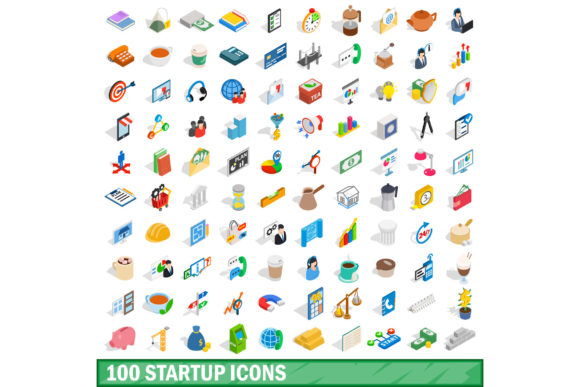
One of the most compelling features of this particular iteration of the set is the availability of graphics in an isometric 3D style. Isometric design has gained substantial traction in recent years because it offers depth and dimensionality while maintaining geometric precision. Unlike flat design, which can sometimes feel two-dimensional and static, isometric illustrations create a sense of volume and structure that aligns well with the complexity of modern software architecture.
When used effectively, isometric icons can transform a dry dashboard or a technical whitepaper into an engaging visual narrative. They allow designers to depict relationships between different components of a system—such as how a mobile app connects to a server and then to a user database—in a way that feels tangible. The 100 Startup Icons Set leverages this style to provide assets that look polished and professional, suitable for high-stakes presentations and marketing materials where first impressions matter.
Evaluating Format Versatility and Technical Flexibility
A critical factor in the selection process for any design resource is the flexibility of the file formats provided. The modern design workflow rarely relies on a single tool or output medium. Designers often need to switch between vector-based editing software for scalable logos and raster-based applications for web optimization. The inclusion of multiple formats—JPG, EPS, AI, PSD, and PNG—within this set addresses this diverse ecosystem of requirements.
- Vector Formats (EPS, AI): These are essential for print media and large-scale displays. Vector files ensure that the icons remain crisp at any size, from a business card to a billboard. The AI format is particularly valuable for Adobe Illustrator users who need to edit individual paths, adjust colors, or modify the geometry of the icons to match a brand's specific guidelines.
- Raster Formats (JPG, PNG): For web development and social media, raster images are often the standard. High-resolution PNGs with transparency allow for seamless integration into websites and apps without background interference. JPGs may be preferred for compressed delivery in email newsletters or low-bandwidth environments.
- Layered Files (PSD): Photoshop documents are invaluable for designers who need to apply custom textures, lighting effects, or shadows to the base icons. Having a layered PSD file means the asset is not just a flat image but a malleable composition that can be adapted to fit specific artistic visions.
This multi-format approach eliminates the need for time-consuming conversion processes or hiring external services to recreate assets. It empowers the design team to work efficiently across different platforms, ensuring that the visual identity remains consistent whether the final output is a printed brochure or a mobile application interface.
Comparative Analysis: Specialized Sets vs. Generalist Alternatives
When evaluating the 100 Startup Icons Set, it is helpful to compare it against broader alternatives available in the marketplace. Many designers initially turn to massive libraries containing thousands of icons covering every conceivable topic. While these resources offer variety, they often suffer from a lack of cohesion. Mixing styles within a single project can lead to a disjointed visual experience, where one icon looks hand-drawn while another appears photorealistic.
In contrast, a specialized set like this one guarantees stylistic uniformity. Every icon shares the same line weight, color palette potential, and perspective logic. This consistency is crucial for establishing trust with the user. Furthermore, generalist sets often require extensive searching to find relevant icons, whereas a startup-focused collection presents a curated list of the most common scenarios immediately. The tradeoff here is specificity; if a project requires non-tech related imagery, a generalist pack might be necessary. However, for the vast majority of technology and business projects, the focused nature of the 100 Startup Icons Set provides a higher return on investment.
Decision Factors for Adoption
Deciding whether to adopt this specific resource depends on several key factors inherent to the project's scope and timeline. For early-stage startups operating on tight budgets and deadlines, the efficiency gained from using a pre-designed, coherent set cannot be overstated. It allows founders and designers to focus on product validation and market fit rather than spending days tweaking SVG paths or sourcing individual graphics.
However, there are situations where a custom illustration service might be a better choice. If a company has a highly unique brand identity that does not fit the established aesthetic of the icon set, or if the project requires proprietary metaphors that do not exist in standard iconography, creating bespoke assets may be warranted. Additionally, if the design direction shifts away from the isometric 3D style toward a minimalist flat design or a retro pixel art style, the current set would not align with the new vision.
Practical Applications and Use Cases
The versatility of the 100 Startup Icons Set extends across numerous mediums. In the realm of web design, these icons serve as intuitive navigation aids and feature highlights. They can break up long blocks of text on a homepage, making the content more digestible for visitors scanning for information.
For pitch decks and investor presentations, the isometric 3D style adds a layer of sophistication. Investors are accustomed to seeing sleek, professional visuals, and a well-executed icon set can elevate the perceived value of the presentation. The ability to manipulate the AI or EPS files allows presenters to change the brand colors of the icons to match their pitch deck template perfectly.
In mobile app interfaces, clarity is paramount. Small screen real estate demands icons that are instantly recognizable. The clean lines and distinct shapes found in this set ensure that users can navigate the application with ease. Whether depicting a "settings" menu, a "user profile," or a "transaction history," the icons provide a visual shorthand that enhances usability.
Navigating Limitations and Future-Proofing
No single resource is perfect, and understanding the limitations of the 100 Startup Icons Set is part of making an informed decision. One potential limitation is the fixed nature of the collection. Once the set is purchased, the number of icons is capped at 100. If a project grows significantly and requires additional variations or entirely new categories of icons, the user may need to supplement this set with other resources.
Furthermore, trends in design evolve rapidly. The isometric 3D style, while currently popular, may eventually give way to new aesthetics. Designers must consider whether they are locking themselves into a specific trend or if the style is timeless enough for their long-term branding strategy. Fortunately, the vector formats included in the package offer a degree of future-proofing. Even if the style becomes dated, the underlying vectors can be modified to update the look, extending the lifespan of the asset.
Making the Final Choice
Selecting the right visual assets is a strategic decision that impacts the overall quality and effectiveness of a design project. The 100 Startup Icons Set stands out as a robust solution for teams looking for a balance between speed, quality, and thematic relevance. Its combination of a focused subject matter, a modern isometric 3D aesthetic, and a wide array of editable file formats makes it a strong contender for anyone working in the startup ecosystem.
While it may not replace the need for custom illustrations in every scenario, it serves as an excellent foundation upon which to build. By reducing the friction of asset creation, it allows creative professionals to channel their energy into solving real problems and innovating. For those evaluating their options, the key is to assess the specific needs of the project against the strengths of the available resources. In many cases, the structured, comprehensive nature of this set will prove to be the most efficient path forward.