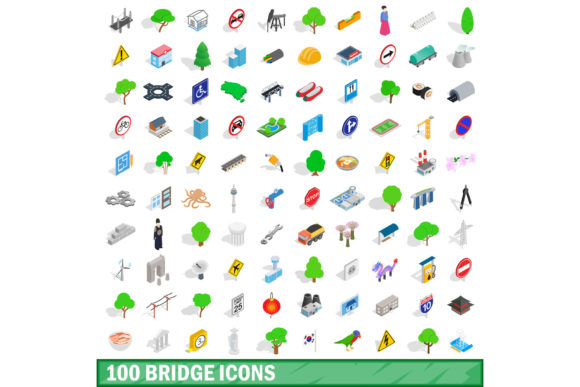
100 Bridge Icons Set, Isometric 3d Style
In the rapidly evolving landscape of digital design, visual clarity often dictates user engagement. When a viewer encounters a complex interface or a dense infographic, their brain seeks immediate patterns to understand the information hierarchy. This is where the 100 Bridge Icons Set, Isometric 3D Style becomes an indispensable asset for modern creators. It represents more than just a collection of graphics; it is a cohesive visual language designed to translate abstract concepts into tangible, three-dimensional realities.
The shift from flat design to depth has been gradual but significant. While flat icons offered simplicity and scalability, they sometimes lacked the tactile quality needed to convey scale, structure, and connection. The isometric 3D style fills this gap by providing a pseudo-3D perspective that maintains geometric precision while adding volume and shadow. For professionals ranging from UI/UX designers to marketing strategists, this specific aesthetic offers a unique solution for illustrating connectivity, infrastructure, and progress without cluttering the visual field.
The Evolution of Visual Connectivity
Bridges have always been metaphors for connection, transition, and overcoming obstacles. In the digital realm, this symbolism is amplified. Whether representing a link between two data centers, a pathway in a user journey, or a literal transportation network in a logistics app, the bridge icon serves as a powerful narrative tool. Historically, these symbols were rendered in simple line art or solid silhouettes. However, as user expectations have shifted towards richer, more immersive experiences, the demand for depth has grown.
The 100 bridge icons set in isometric 3D style responds directly to this changing preference. Modern workflows require assets that can stand out in crowded marketplaces like mobile app stores or SaaS landing pages. An isometric bridge does not merely sit on a screen; it occupies space. It suggests stability and engineering, qualities that are highly desirable when building trust with an audience. This evolution reflects a broader trend where users prefer interfaces that feel "real" and grounded, even within a virtual environment.
Furthermore, the versatility of the isometric format allows these icons to adapt to various contexts. A bridge depicted in 3D can represent a literal crossing in a travel application or a metaphorical step in a financial growth chart. The ability to visualize these dual meanings simultaneously makes the set particularly valuable for educators and content creators who need to explain complex systems simply.
Why Isometric Design Dominates Modern Workflows
The adoption of isometric illustrations is not merely a stylistic choice; it is a strategic decision driven by usability and aesthetics. Unlike perspective drawings, which can distort objects based on the viewing angle, isometric projections maintain consistent scaling. This consistency is crucial for technical documentation, architectural visualization, and game design. When a designer selects the 100 Bridge Icons Set, Isometric 3D Style, they are choosing a system that ensures visual harmony across different screens and devices.
For entrepreneurs and freelancers, time is a critical resource. Creating custom 3D models from scratch requires specialized skills in software like Blender or Cinema 4D, along with significant rendering time. High-quality vector-based isometric sets offer a streamlined alternative. They provide the same professional look and depth perception but are ready to deploy immediately. This efficiency allows small teams to compete visually with larger corporations that might have dedicated design departments.
- Visual Consistency: Ensures all elements in a project share the same lighting and angle, creating a unified brand identity.
- Scalability: Vector formats allow icons to be resized for everything from favicons to billboards without losing quality.
- Depth Perception: Helps users distinguish between layers of information, improving navigation and comprehension.
The practical implications of using these icons extend beyond mere decoration. In user experience (UX) design, clear visual cues reduce cognitive load. When a user sees a 3D bridge connecting two points, the action required is intuitive. This natural understanding leads to higher conversion rates and lower bounce rates, making the investment in high-quality assets a sound business decision.
Technical Versatility Across Formats
A major advantage of this comprehensive collection lies in its extensive file format support: JPG, EPS, AI, PSD, PNG. Each format serves a specific purpose in the creative pipeline, ensuring that the 100 bridge icons set in isometric 3D style fits seamlessly into any workflow.
Designers working on print media will appreciate the EPS and AI files. These vector formats preserve the crisp edges and infinite scalability required for high-resolution printing, such as brochures, business cards, or large-scale signage. The ability to edit individual paths in Adobe Illustrator means that colors and dimensions can be tweaked to match specific brand guidelines without compromising the structural integrity of the isometric view.
For web and mobile applications, PNG and JPG files offer optimized raster images. These are essential for rapid deployment where loading speed is a priority. The inclusion of PSD files further enhances flexibility, allowing users to access layer-specific controls. This is particularly useful for advanced compositing, where a designer might want to isolate the bridge structure from its background or adjust shadows independently to create dynamic effects.
The diversity of formats also supports collaboration. Marketing teams might use the raster versions for social media campaigns, while developers utilize the vector assets for responsive web design. This cross-functional compatibility reduces friction between departments and ensures that the visual message remains consistent from the initial concept to the final product.
Practical Applications for Diverse Industries
The utility of the 100 Bridge Icons Set, Isometric 3D Style transcends specific industries. Its applicability spans sectors that rely heavily on visualization and conceptual representation. In the technology sector, these icons can illustrate cloud connectivity, server links, or data transfer processes. The 3D aspect adds a layer of sophistication that aligns well with tech-forward branding.
Urban planning and real estate developers find immense value in these assets for presenting projects. An isometric bridge can depict a new pedestrian walkway or a highway interchange, helping stakeholders visualize the impact of infrastructure changes. Similarly, logistics companies use these icons to map supply chains, showing how goods move from one node to another through various transit hubs.
Educators and bloggers also benefit significantly. Explaining historical engineering feats or geographical features often requires visual aids that go beyond 2D maps. Isometric bridges bring these topics to life, making learning materials more engaging for students. By integrating these visuals into articles or presentations, content creators can break up text-heavy sections and maintain reader interest.
Even in the realm of personal hobbies, such as gaming or model building, these icons serve as inspiration. Hobbyists often look for reference material to create their own dioramas or digital art. Having a curated set of 100 variations provides a wealth of ideas, encouraging creativity and experimentation.
Making the Right Choice for Your Projects
Selecting the right visual assets is a balance between aesthetic appeal and functional utility. When evaluating options, professionals should consider the coherence of the set. Does the lighting match? Are the angles consistent? The 100 bridge icons set in isometric 3D style excels in these areas, offering a unified library that eliminates the jarring effect of mixing styles.
It is also important to consider the future-proofing of the assets. As design trends evolve, the demand for clean, structured, and dimensional graphics is likely to persist. Investing in a versatile set now ensures that your portfolio remains relevant. Moreover, the availability of editable vector files means that these icons can be adapted as needs change, extending their lifespan and value.
For those looking to enhance their digital presence, incorporating high-quality isometric icons is a strategic move. It signals attention to detail and a commitment to quality. Whether you are launching a startup, updating a corporate website, or producing educational content, the right visual tools can make a profound difference. The 100 Bridge Icons Set, Isometric 3D Style provides exactly that—a robust foundation for building compelling narratives through design.
In conclusion, the integration of isometric 3D bridge icons into design projects addresses the modern need for depth, clarity, and professionalism. By leveraging a diverse range of formats and a vast array of designs, creators can craft experiences that resonate with audiences on a deeper level. As we continue to navigate an increasingly visual world, the ability to communicate complex ideas through simple yet effective imagery will remain a cornerstone of successful communication.